
You know that sinking feeling when OSHA shows up unannounced? Or worse—when an ambulance leaves your facility with one of your workers inside? As a safety manager in a high-volume warehouse or distribution environment, you’re constantly balancing productivity demands with worker protection. But what if workplace safety wasn’t just about compliance? What if it was the key to improving retention, efficiency, and profitability?
The reality is that a strong workplace safety culture delivers measurable returns. From reducing insurance premiums to cutting turnover in today’s competitive labor market, safety has become a competitive advantage that protects both your people and your bottom line.
Beyond Compliance: The True Cost of Workplace Incidents
Every safety manager knows the direct costs of accidents—medical expenses, workers’ compensation claims, potential OSHA fines. But those visible numbers are only part of the story. The National Safety Council estimates indirect costs run four to ten times higher, including:
-
Lost productivity from injured workers and disrupted teams
-
Training expenses for replacements
-
Administrative time for investigations and reporting
-
Equipment damage and repair costs
-
Reduced morale and engagement across the workforce
-
Potential litigation and legal fees
One lost-time injury averages $42,000 in direct costs—but the true cost could reach $168,000–$420,000 when hidden factors are included. For a warehouse with a 3% profit margin, that means generating $5.6–14 million in sales just to break even on one incident.
Building a Safety Culture That Pays Off
Creating a preventive safety culture isn’t about adding more rules—it’s about changing how your team thinks and acts. Leading distribution facilities build culture through:
1. Leadership Buy-In
Workers need to see managers present, participating in safety meetings, and recognizing safe behaviors. Visible commitment from leadership cascades throughout the team.
2. Training That Sticks
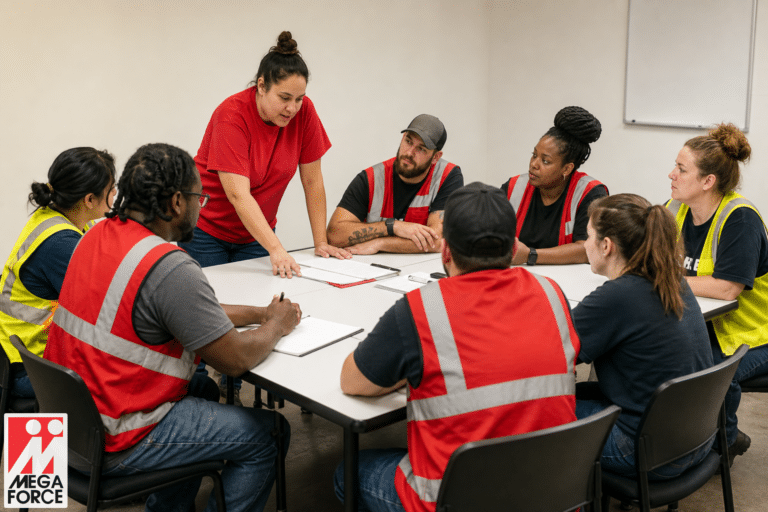
Move beyond “check-the-box” sessions. Use scenario-based, hands-on training tailored to your risks. Refresh quarterly, not just at onboarding. Key areas include ergonomics, equipment safety, hazard recognition, and emergency procedures.
3. Safety Audits That Drive Change
Monthly audits shouldn’t be paperwork. Use them to track near-misses, celebrate improvements, and correct hazards before they become incidents. Leading indicators predict safety performance better than lagging injury stats.
4. Employee Empowerment
Allow workers to stop unsafe tasks without fear. Reward meaningful safety suggestions. When employees feel ownership, incident rates drop and engagement rises.
Safety as a Retention Strategy
In today’s tight labor market, safety isn’t just a compliance box—it’s a retention tool. Workers are 3.5 times more likely to stay when they feel their employer genuinely values safety. That sense of care fosters loyalty. Consider initiatives like:
-
Recognition programs for injury-free milestones
-
Peer safety mentorship programs
-
Family safety events that extend training beyond the workplace
-
Transparent reporting on safety metrics and progress
When workers feel protected, they are more likely to stay and more willing to perform at their best.
Partnering with Staffing Agencies That Prioritize Safety
Even the best safety managers can’t do it all alone. Strategic partnerships with staffing providers that emphasize safety can strengthen your program. Here’s what to look for in a staffing partner:
-
Rigorous Pre-Screening: Assessing candidates’ safety knowledge, capabilities, and commitment before placement.
-
Safety Training: Delivering documented training specific to warehouses and distribution facilities.
-
Ongoing Support: Regular check-ins, open reporting channels, and rapid response to safety concerns.
-
Data-Driven Insights: Tracking safety metrics for placed workers and sharing data to improve outcomes.
At Mega Force, we see every associate as part of your safety culture. That’s why we evaluate safety during the hiring process, train workers on industry standards, and provide ongoing support to protect both people and operations.
Proving ROI with the Right Safety Metrics
To demonstrate the impact of safety on profitability, track KPIs such as:
-
Total Recordable Incident Rate (TRIR)
-
Days Away, Restricted, or Transferred (DART) rates
-
Workers’ compensation costs as a percentage of payroll
-
Safety training hours per employee
-
Near-miss reporting rates
-
Employee perception surveys
-
Productivity metrics tied to safety improvements
Warehouses that improve safety culture often see 25–40% productivity gains. Fewer injuries mean fewer disruptions—and more consistent output.
Your Next Steps Toward Safety Excellence
A strong safety culture doesn’t happen overnight, but every step you take makes an impact. Start by benchmarking your current safety performance and identifying your biggest risks. Then, build improvements around training, audits, and employee engagement—and partner with staffing providers who share your commitment to safety.
At Mega Force, we’re more than a staffing firm—we’re your partner in building a safer, stronger operation. Every worker we place is trained and supported to protect themselves, their coworkers, and your facility.
Ready to transform workplace safety into a driver of profitability? Request pre-screened, safety-trained talent today. Together, we can protect your workforce and strengthen your bottom line.