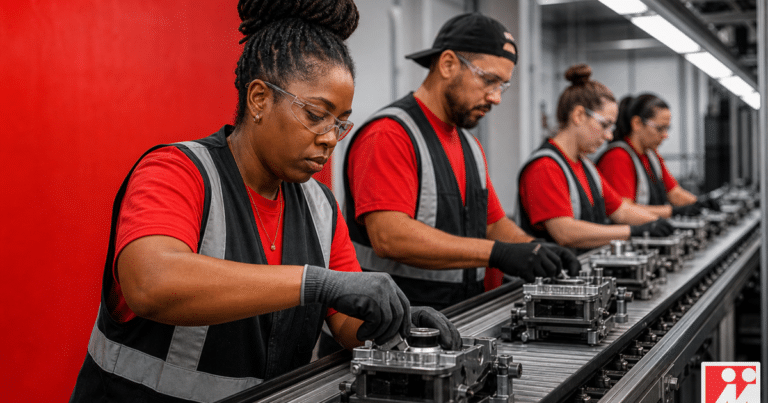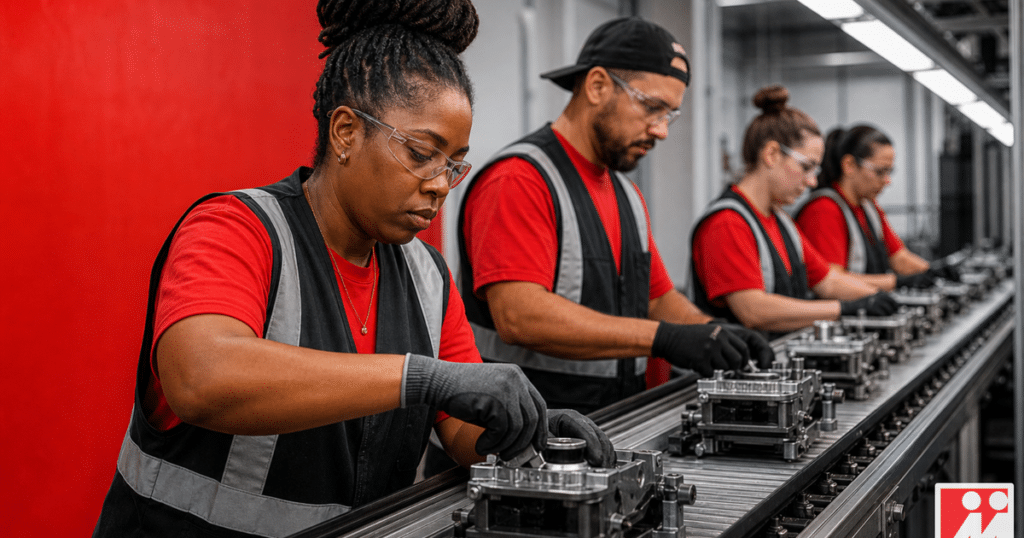
Assembly line staffing becomes especially challenging when production demand increases quickly. Operations leaders need enough workers to hit output goals, but adding employees too quickly can create another set of problems.
An employee who is not properly screened or trained can contribute to rework, material waste, production delays and safety concerns. During peak periods, those mistakes can compound quickly across an entire line.
The goal is not simply to increase headcount. Manufacturers need a staffing strategy that adds capacity while protecting quality, safety and productivity.
Assembly Line Staffing Requires More Than Fast Hiring
When orders increase, the immediate reaction may be to fill every open position as quickly as possible.
Speed matters, but assembly environments require employees who can consistently follow procedures, meet production standards and work safely around equipment and coworkers.
A poor hiring decision can create costs through:
-
Increased defects
-
Product rework
-
Material waste
-
Production slowdowns
-
Additional supervisor oversight
-
Safety risks
-
Early turnover
-
Repeated recruiting and training
Manufacturers can reduce these risks by establishing clear performance expectations before recruiting begins.
Mega Force’s light industrial staffing solutions can help employers identify workers for manufacturing, production and assembly environments.
Define Assembly Line Competencies Before Hiring
Before increasing headcount, identify what a new employee must be able to do successfully.
Requirements may include:
-
Following written work instructions
-
Meeting basic production expectations
-
Performing repetitive tasks accurately
-
Using hand tools or production equipment
-
Recognizing defects
-
Following safety procedures
-
Communicating problems to supervisors
-
Maintaining consistent attendance
Separate skills employees must already possess from tasks that can be taught during onboarding.
This helps hiring teams avoid two common mistakes: accepting candidates who are not prepared for the work or rejecting capable candidates who could succeed with appropriate training.
Build Training Time Into Your Staffing Forecast
A worker’s first day should not be the same day the production schedule assumes full output.
Every new employee requires some level of ramp time.
Operations managers should work backward from peak production dates and account for:
Recruiting time: How long will it take to identify qualified candidates?
Screening time: What interviews, assessments or checks are required?
Onboarding time: When will employees complete paperwork and safety orientation?
Training time: How long does someone typically need to learn the station?
Ramp time: When can the employee reasonably be expected to meet production standards?
Starting earlier gives supervisors time to train employees without sacrificing the output they are trying to protect.
Employers can also use Mega Force’s temporary staffing services in North Carolina when additional workforce capacity is needed for peak production periods.
Use Competency Gates Before Full-Volume Assignment
New employees should demonstrate that they can perform essential tasks before being expected to work independently at full production volume.
A competency gate can be simple.
For example, an employee may need to demonstrate that they can:
-
Follow the standard operating procedure correctly.
-
Complete the task safely.
-
Identify common quality defects.
-
Meet an initial accuracy target.
-
Demonstrate consistent performance under supervision.
Once those expectations are met, supervisors can gradually increase production responsibility.
This approach creates a defined path from trainee to fully productive worker rather than relying on supervisors to make subjective decisions about readiness.
Account For Supervisor Mentoring Capacity
Adding 20 new employees does not automatically create the equivalent of 20 fully productive workers.
Experienced supervisors and employees must often spend time answering questions, correcting mistakes and demonstrating procedures.
If too many new workers begin simultaneously, the mentoring burden can affect the productivity of the core team.
Instead, consider staggering start dates or organizing employees into smaller training groups.
Managers can also identify experienced workers who are prepared to mentor new hires. Clear training materials, checklists and station-specific instructions can reduce the amount of information mentors need to explain repeatedly.
Temp-To-Hire Can Balance Volume And Quality
Temp-to-hire staffing gives manufacturers additional flexibility when they need to increase assembly line headcount without making immediate permanent hiring decisions.
Employees can begin working during the high-demand period while managers evaluate actual job performance.
A structured evaluation period of roughly 30 to 60 days can provide insight into:
-
Attendance
-
Reliability
-
Productivity
-
Quality
-
Safety awareness
-
Ability to learn
-
Response to coaching
-
Team fit
Employers can then make permanent hiring decisions based on demonstrated performance rather than an interview alone.
This makes temp-to-hire more than a headcount solution. It becomes a practical workforce evaluation strategy.
Track Quality While Headcount Increases
Production volume should not be the only metric monitored during a staffing ramp.
Operations leaders should also track:
-
Defect rate
-
Rework
-
Scrap or material waste
-
Production output
-
Safety incidents
-
Attendance
-
Training completion
-
Supervisor interventions
-
Time to competency
If production rises while defects and rework climb at the same time, additional staffing may not be generating the expected return.
Daily or weekly review of these metrics can help managers identify where additional coaching, training or reassignment is needed.
Protect Your Core Assembly Team During Peak Demand
Your experienced employees provide much of the knowledge that keeps an assembly line operating efficiently.
During peak periods, those workers may already be handling higher output expectations. Adding excessive overtime plus responsibility for training large groups of new employees can create fatigue and frustration.
A planned staffing ramp helps distribute that workload.
Temporary and temp-to-hire employees can absorb additional production demand while experienced employees remain focused on quality, safety and mentoring.
Mega Force also offers guidance on manufacturing staffing in North Carolina for employers managing ongoing labor shortages.
Build Assembly Line Capacity Without Sacrificing Quality
Peak demand creates pressure to move quickly, but hiring volume without the right structure can create costly problems downstream.
The strongest assembly line staffing strategy combines accurate workforce forecasting, clear competency requirements, realistic training time and measurable performance standards.
Temp-to-hire staffing adds another layer of flexibility by allowing manufacturers to increase capacity while evaluating employees through actual job performance.
Mega Force helps North Carolina manufacturers connect with qualified workers for temporary, temp-to-hire and other workforce needs. Request talent from Mega Force to strengthen your assembly line before peak demand puts additional pressure on production.